Dental implant treatment has evolved dramatically over the past decade. While implants were once placed primarily based on clinical experience and two-dimensional imaging, modern technology now allows us to plan and execute implant treatment with extraordinary precision.
In implant dentistry, precision is everything. A poorly placed dental implant can lead to a cascade of complications—pain, infection, peri-implantitis, aesthetic failures, functional problems, and even the need for complex revision therapy. These issues don’t just impact your oral health; they come with significant emotional, time, and financial costs for patients.
At Kazemi Oral Surgery, we believe most of these complications are preventable. In fact, our experience shows that 90% of implant-related complications can be avoided by following our Dental Implant Vitality Concepts, which prioritize meticulous planning and execution through a fully digital workflow.
Starting With the End in Mind
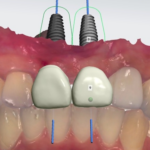 Successful implant treatment begins with the desired restorative result: how the final tooth will look, function, and integrate with the patient’s smile and bite. Digital planning allows us to work backwards from the ideal tooth position and determine the precise implant location required to support it. Using advanced software, we integrate multiple data sources, including:
- 3D CBCT imaging of the bone and anatomical structures
- Digital scans of the teeth and soft tissues
- Prosthetic design of the final restoration
This process ensures that the implant is placed exactly where the future tooth needs it, rather than adjusting the restoration to fit the implant afterward.
Understanding the Patient’s Anatomy in 3D
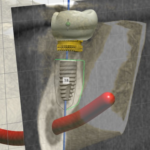 Traditional two-dimensional radiographs can only provide limited information. With 3D CBCT imaging, we can visualize the patient’s anatomy in full detail.
This allows us to carefully evaluate:
- Bone volume and density
- Position of important structures such as nerves and sinuses
- Soft tissue contours
- Relationship between teeth, bone, and prosthetic space
By planning digitally, we can anticipate potential challenges before surgery and design a treatment plan that minimizes risk.
Guided Surgery for Precision and Safety
 Once the digital plan is finalized, a custom surgical guide is fabricated. This guide fits precisely over the patient’s teeth or gums and directs the implant placement according to the digital plan.
Guided surgery offers several advantages:
- Greater precision
The implant is placed at the exact position, angle, and depth determined during digital planning. - Improved safety
Critical anatomical structures are clearly mapped and avoided. - Minimally invasive procedures
In many cases, guided surgery allows for smaller incisions and less surgical trauma. - More predictable outcomes
The restorative dentist receives an implant placed in the ideal prosthetic position.
A Prosthetically Driven Approach
One of the most important aspects of modern implant dentistry is the concept of prosthetically driven implant placement. In simple terms, this means that the implant is placed to support the ideal tooth—not the other way around.
Digital planning allows us to coordinate closely with the restorative dentist to ensure that:
- The implant supports a natural emergence profile
- The restoration is easy to clean and maintain
- Occlusion and function are optimized
- Long-term biological stability is preserved
This collaborative approach improves both aesthetic and functional outcomes.
Better Communication With Referring Dentists
Digital workflows also improve communication between the surgical and restorative teams. The treatment plan can be shared digitally, allowing restorative dentists to review the proposed implant position, discuss restorative considerations, and collaborate before the procedure takes place.
This alignment helps ensure that the surgical and restorative phases of treatment work seamlessly together.
A Commitment to Precision and Long-Term Success
Dental implants are a long-term investment in a patient’s oral health and quality of life. Because of this, every step of the process should be carried out with careful planning and precision.
Digital planning and guided surgery allow us to approach implant treatment with:
- Greater predictability
- Improved safety
- Better restorative outcomes
- A more comfortable experience for patients
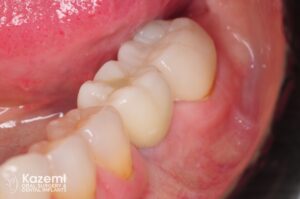 For these reasons, every implant procedure in our practice begins with a comprehensive digital plan and is performed using guided surgical technology. It is part of our commitment to delivering implant care that prioritizes biology, function, aesthetics, and long-term vitality.