After a tooth extraction, implant, or wisdom tooth surgery, some patients notice facial pain that isn’t quite the same as the pain at the surgical site. Instead, the jaw muscles themselves feel tight, achy, or tender. This jaw pain is felt sometimes on one or both sides, and sometimes spreading toward the ear or temple. This is myofascial pain, and it’s both a common and manageable part of recovery.
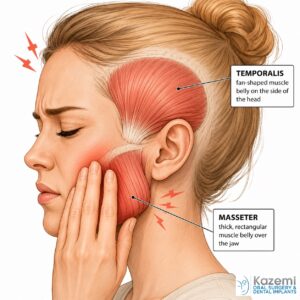
The masseter and temporalis muscles are usually strained after oral surgery procedures that require a longer period of mouth opening.
Why facial pain happens after surgery
Oral surgery procedures can require your mouth to stay open wide for an extended time. That sustained stretching can leave the chewing muscles fatigued and overworked similar to how any muscle can feel sore after extended strain. The result can be tenderness, tightness, difficulty opening the mouth, and aching that presents elsewhere in the face, head, or neck. Luckily, this pain is entirely a muscular issue and not a sign that something is wrong with your surgery. The symptoms will usually subside within one to two weeks.
What helps most to treat facial pain near the jaw
The mainstay of treatment is simple, conservative self-care:
- Rest the jaw. Stick to a soft diet, take smaller bites, and avoid chewing gum, tough foods, and wide yawning while the muscles recover. We find that the best way to avoid opening your mouth too wide while yawning is to place a fist underneath the chin during the process of yawning.
- Apply moist heat. Two days after surgery, a warm compress on the sore muscles for 15–20 minutes several times a day relaxes tension and improves blood flow. (In the very first 24–48 hours, cold packs are better for swelling.)
- Gentle stretching. Slow, easy mouth-opening and side-to-side movements, done within a comfortable range without force, will keep the muscles from stiffening.
- Self-massage. Lightly massaging the cheek and temple muscles in small circles can ease tender spots.
- Anti-inflammatory medication. Over-the-counter NSAIDs like ibuprofen, reduce both muscle pain and inflammation. Always follow the dosing your surgeon recommends.
- Manage stress and clenching. Be mindful of daytime jaw clenching, and get good rest. These will also help your muscles recover.
When more may be needed for jaw pain and/or facial pain
Most myofascial pain resolves on its own with these measures. If soreness lingers or becomes bothersome, additional options are well established, including physical therapy for the jaw, a night guard or occlusal splint to reduce clenching, and trigger-point therapy. For persistent, refractory cases, treatment such as botulinum toxin injections may be considered. Your oral surgeon can guide you to the right next step.
When to call your surgeon for jaw pain or facial pain
Reach out to our office if you have severe or worsening facial pain or jaw pain, if you truly can’t open your mouth, if there’s significant swelling, fever, or signs of infection, or if the muscle pain hasn’t improved after about two weeks. These are worth a look to rule out other causes.
Jaw muscle soreness after surgery is common and with a little rest and care, should be temporary. If yours isn’t improving, or you simply want reassurance, please give us a call.
https://www.facialart.com/contact-dr-kazemi-dentist-washington-dc/