Understanding the Causes — and How to Prevent It
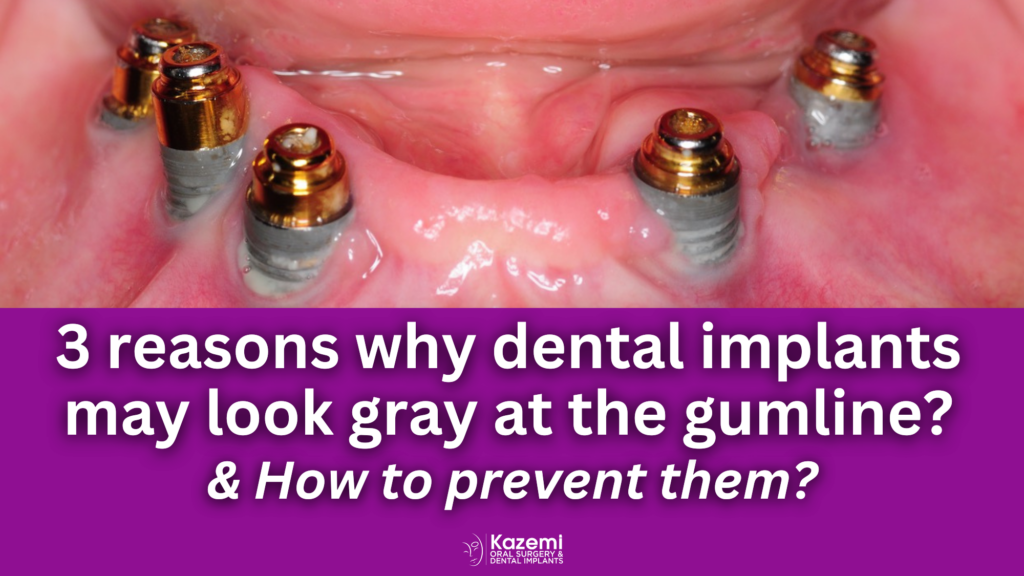
Dental implants are designed to look and feel like natural teeth. When properly planned and placed, they blend seamlessly with the surrounding gums and smile. But occasionally, patients notice something concerning:
- A grayish shadow at the gumline
- Dark or thin-looking tissue
- Or worse, visible metal exposure around the implant
This isn’t just an aesthetic issue. It’s often a sign that the biology and foundation around the implant were not ideal from the start. At our practice, we believe implants should not only integrate, they should look natural, feel healthy, and remain stable for decades. That’s what we call implant vitality. Let’s look at the three most common causes of gray or exposed implants, and how we prevent them.
1. Thin Gum Tissue & Lack of Attached Gingiva
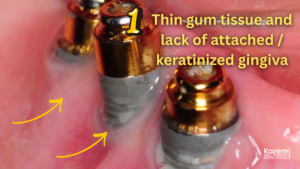 When gum tissue is thin or delicate, it acts almost like tracing paper. Instead of masking the titanium abutment underneath, light passes through, creating a gray or bluish shadow. Thin tissue is also more prone to:
- Recession
- Inflammation
- Discomfort when brushing
- Long-term exposure of metal
Additionally, a lack of attached (keratinized) gingiva means the tissue moves too much during chewing and brushing, which increases irritation and recession over time.
Prevention
Before implant treatment, we often:
- Thicken the tissue with connective tissue grafts
- Increase attached gingiva
- Create a strong, stable soft-tissue seal
Thicker tissue = better color, comfort, and long-term stability.
2. Inadequate Bone Support
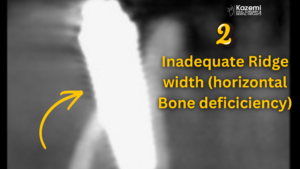 Implants depend on bone for both strength and aesthetics. When bone is too thin or deficient:
- The implant may sit too close to the surface
- Gum tissue loses support
- Recession develops
- Metal becomes visible
Even if the implant integrates initially, poor bone support can compromise the long-term appearance and health.
Prevention
This is why we often graft bone first when the ridge is thin.
- Creates proper thickness
- Allows ideal implant positioning
- Supports the gums naturally
- Prevents collapse and exposure
Think of bone as the foundation of a house, without it, everything above suffers.
3. Poor Implant Angulation or Position
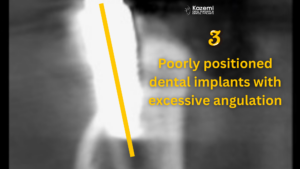 Even with good tissue and bone, poor positioning can ruin aesthetics. If an implant is:
- Too facial (toward the lip)
- Too shallow
- Angled incorrectly
…the metal or abutment may shine through or become exposed.
Freehand placement increases this risk.
Prevention
Today, we use digital precision planning:
- 3D CBCT scans
- Digital restorative design
- Virtual implant positioning
- CAD-designed surgical guides
This allows implants to be placed exactly where they belong, not just where it’s easiest surgically.
Precision protects both biology and beauty.
The Bigger Picture: It’s Not Just About Looks
Preventing gray gums or exposure isn’t only cosmetic. These same principles also improve:
- Stability
- Function
- Comfort
- Cleansibility
- Long-term health
- Longevity
In other words, when we respect tissue thickness, bone biology, and precise positioning, implants don’t just survive, they thrive.
That’s the difference between survival and vitality.
Our Philosophy
At our office, every implant is planned with intention:
- Develop thick, healthy gum tissue
- Ensure adequate bone (graft when needed)
- Digitally design placement
- Use guided surgery for precision
Because patients deserve implants that look natural on day one, and still look natural 20 years later.
If you’re considering dental implants or concerned about the appearance of an existing implant, we’re happy to evaluate your case and discuss options for improving both health and aesthetics.
Healthy tissue. Proper foundation. Precise placement.
That’s implant vitality.
Dr. H. Ryan Kazemi is a board-certified oral & maxillofacial surgeon in Bethesda, MD