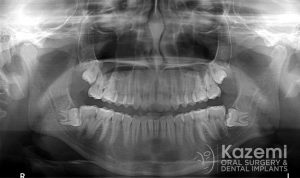
Wisdom teeth frequently become impacted or stuck behind the second molars and are extremely difficult to clean. Plaque, along with poor access for oral hygiene, results in inflammation that can cause
infection, tooth decay, or gum disease. Wisdom teeth may also cause jaw cysts. They also have been implicated in causing shifting of the adjacent teeth.
The most common problems associated with wisdom teeth:
- Pain and swelling: These are the most common initial symptoms. They are caused by inflammation (pericoronitis) or infection of gum tissue.
- Gum disease (periodontal disease): Gum disease can develop between the second molars and wisdom teeth. They share the same bone and gum tissue, and when the tissue is damaged, repair or regeneration is extremely difficult, if not impossible. This greatly compromises the health of the second molars, which are very important for chewing.
- Decay (caries): Cavities may occur on the wisdom teeth or on the root surface of the second molars. This is very difficult, if not impossible, to treat. If a second molar develops deep decay on its side, it often has to be extracted.
- Cysts in the jaw bone: Cysts cause significant destruction of bone and damage to surrounding structures (teeth, nerve, jaw bone). Some can get quite large and weaken Decay on the Second Molarthe jaw bone with a potential fracture.
- Shifting of adjacent teeth: This is not entirely understood by dentists, but impacted wisdom teeth may be a contributing factor in teeth crowding. Orthodontists often recommend removal of the wisdom teeth to prevent shifting.
The literature and collective experiences of many dentists support one fact: wisdom teeth predictably cause problems in a large percentage of people.
According to an extensive literature review* by the American Association of Oral and Maxillofacial Surgeons (AAOMS), it is reported that:
- Impacted wisdom teeth adversely affect the gum tissue health of adjacent teeth.
- Impacted third molars may still change position after age of 23.
- Erupted third molars (non-impacted) do not necessarily imply a good state of health. They are associated with increased gum disease and loss of bone.
- Absence of symptoms such as pain and swelling does not indicate absence of disease.
- Bacteria exist in high numbers around third molars.
- Gum disease progresses even in the absence of symptoms and as one ages.
- Incidence of post-operative complications following third molar removal is higher in patients over 25 years of age.
- Early removal is recommended in both impacted and non-impacted scenarios, and in both symptomatic and asymptomatic patients.
The AAOMS literature review concludes:
- Early removal of wisdom teeth is recommended to prevent infection, pathology, and damage to surrounding teeth.
- The philosophy, “If it doesn’t hurt you, keep it” is not supported by dental literature.
- The risk of complications with wisdom teeth removal may increase as one ages.
- Disease process can occur in both impacted and non-impacted (erupted) third molars.