For many patients who have lost all or some of their teeth, severe jawbone loss becomes a major barrier to dental implant treatment. After complete tooth loss, the jawbone naturally shrinks over time—a process accelerated by periodontal disease, chronic infection, and wearing traditional dentures. When bone resorption becomes advanced, patients are often told they need extensive bone grafting before implants can be placed.
While traditional bone grafting can rebuild lost bone, it typically requires multiple surgeries, long healing periods, increased cost, and higher levels of surgical complexity. For many people, this makes full arch dental implants feel out of reach.
A Breakthrough: Full or Partial Arch Dental Implants Without Bone Grafting
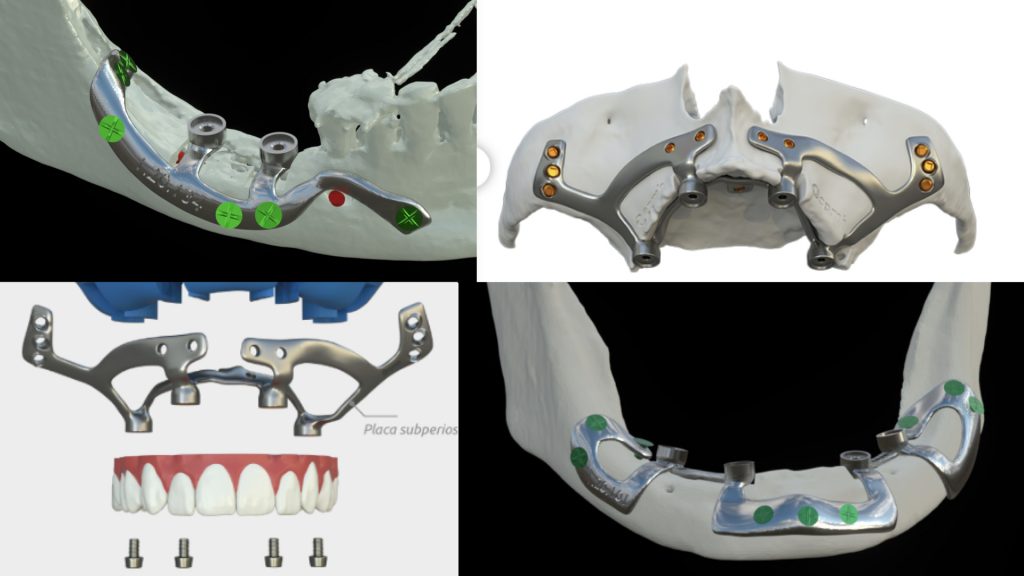
A new, cutting-edge full arch implant system now offers hope for patients with complete tooth loss and severe bone loss—without the need for bone grafting.
This advanced treatment uses:
-
3D CT scanning for full diagnostic evaluation
-
Computer-guided planning to map implant placement precisely
-
CAD/CAM-designed custom implants engineered to fit a patient’s remaining bone—even when bone thickness is extremely limited
Because these customized implants are supported by the existing jawbone (regardless of its volume), patients can receive a full or partial arch of dental implants in a single surgical procedure, with immediate fixed teeth and no traditional bone grafts.
This graft-less approach shortens treatment time dramatically, and avoids the discomfort, complexity, and healing delays associated with major reconstructive bone grafting.
Why This Treatment Is a Game Changer
This new system represents a major advancement for patients with severe bone loss by offering:
-
No bone grafting required
-
Immediate fixed teeth in a single appointment
-
High predictability and long-term success
-
Lower overall cost compared to traditional reconstructive approaches
-
Shorter treatment time and faster recovery
-
A comfortable, minimally invasive experience
For thousands of people who have been told they “don’t have enough bone for dental implants,” this breakthrough finally provides a reliable, proven solution.