Dental implants are designed to last for many years, providing stable function and natural aesthetics. However, sometimes a subtle but concerning issue may develop — a chronic, low-grade discomfort around an implant that doesn’t cause obvious swelling or severe symptoms but is accompanied by slow, progressive bone loss commonly associated with condition known as peri-implantitis.
While this condition may seem minor at first, it can be an early warning sign of a deeper problem that, if ignored, could compromise the long-term health of the implant.
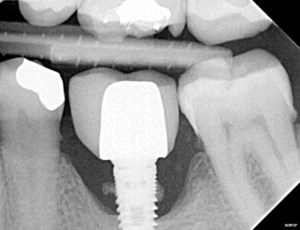 What Is Chronic Low-Grade Implant Pain?
Unlike acute infections that cause swelling, redness, and throbbing pain, chronic low-grade implant discomfort is more subtle. Patients often describe it as:
- A vague awareness or pressure around the implant site
- Mild tenderness when chewing or cleaning
- Occasional sensitivity that comes and goes
There are usually no major visible changes, and the gum tissue may look completely healthy. Yet beneath the surface, slow bone loss may be occurring.
The Hidden Nature of Bone Loss
Bone loss around implants can be insidious, it happens gradually and often without obvious symptoms. Regular X-rays or 3D scans (CBCT) may reveal that bone levels have receded millimeter by millimeter over time.
This type of loss is not simply a cosmetic issue. If not addressed early, it can lead to:
- Loosening of the implant
- Recession of gum tissue
- Exposure of implant threads
- Future failure of the restoration
By the time pain or swelling appears, significant damage may already have occurred.
Common Causes
There are several potential reasons for chronic low-grade pain and bone loss around an implant, including:
- Residual infection or biofilm under the gumline
- Lack of adequate bone or gum tissue for proper implant coverage
- Excessive mechanical stress from bite forces or poorly aligned occlusion
- Micro movement of components such as screws or abutments
- Improper implant position or inadequate initial bone support
- Systemic or local inflammatory response due to poor oral hygiene or biomechanical overload
Each case requires a detailed evaluation to identify the exact source and guide targeted treatment.
Why Early Detection and Treatment Are Critical
The most important message for both patients and clinicians is this: act early and treat early.
When caught at an early stage, bone loss and discomfort can potentially be reversed or stabilized through:
- Thorough cleaning and decontamination of implant surfaces
- Bite adjustment or redesign of the restoration
- Local bone grafting or regenerative procedures
- Soft tissue modification to improve access and health
Delaying treatment only allows the condition to worsen, leading to more invasive and costly interventions.
How We Approach It at Kazemi Oral Surgery & Dental Implants
At our practice, we emphasize routine implant maintenance and digital monitoring. Using high-resolution CBCT scans, we can detect even minimal changes in bone structure long before symptoms appear. Our Dental Implant Vitality protocols focus on:
- Identifying early warning signs
- Understanding biological and mechanical causes
- Designing conservative, regenerative treatment solutions
- Preventing recurrence through precision maintenance
Our goal is not just to keep implants functional — but to keep them vital, healthy, and comfortable for life.
If you notice even mild or intermittent discomfort around your dental implant, don’t wait. Schedule an evaluation early. Acting promptly can make all the difference between saving and losing an implant.