Dental implants require a solid foundation of bone for long-term stability, natural esthetics, and healthy function. However, when teeth are lost, especially in the lower front region, significant bone resorption can occur. This often leaves patients with a three-dimensional bony defect: loss of bone both horizontally (width) and vertically (height).
One of the most advanced techniques to restore such deficiencies is Guided Bone Regeneration (GBR). In this approach, bone grafting materials and protective membranes are used to rebuild missing bone, creating the necessary volume for ideal implant placement.
The Clinical Challenge
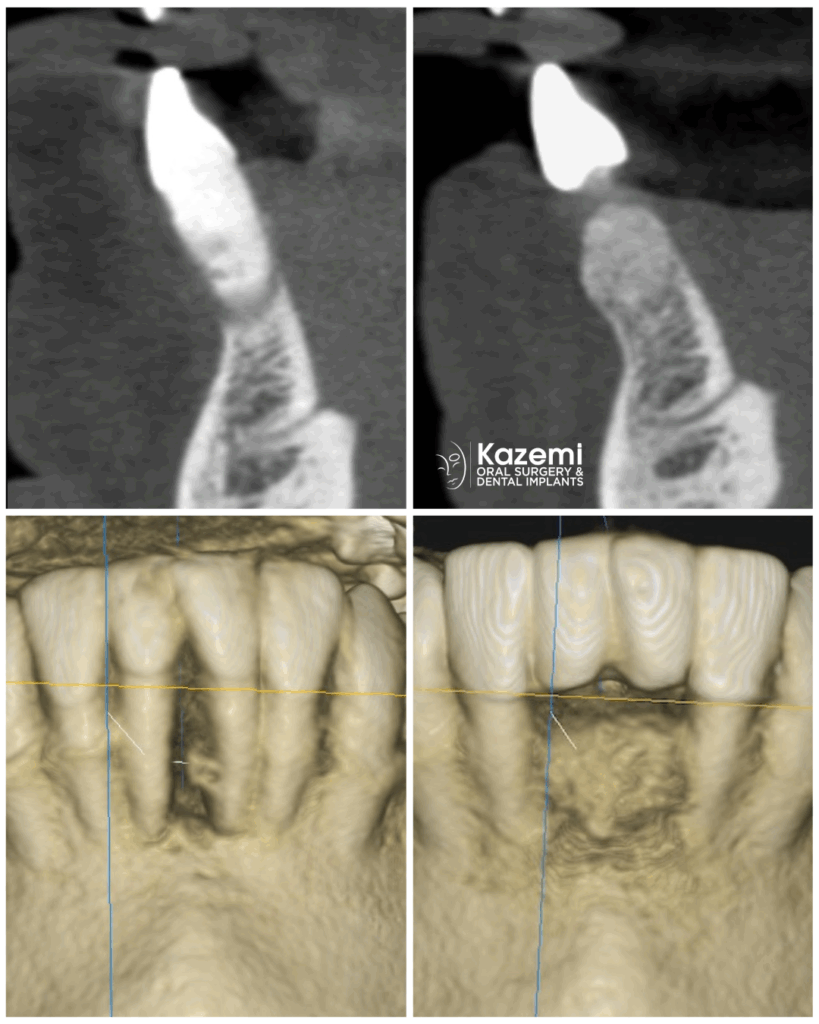
A patient presented with missing lower front teeth and a severe bony defect. The ridge had lost not only width but also vertical height, making implant placement impossible without augmentation. Traditionally, this type of defect might require multiple surgeries or more invasive block grafting techniques.
The Guided Bone Regeneration Solution
In this case, we utilized a single-stage GBR procedure to rebuild the ridge. The steps included:
-
Careful exposure of the defect – the thin ridge and collapsed bone were fully visualized.
-
Bone grafting – particulate bone graft (autogenous + allogeneic bone) and platelet-rich fibrin (PRF) was placed to restore both horizontal and vertical dimensions.
-
Membrane placement – a resorbable membrane was used to stabilize the graft and protect it during healing.
-
Primary closure – soft tissue was advanced and secured over the site to create a tension-free seal, critical for success.
Results
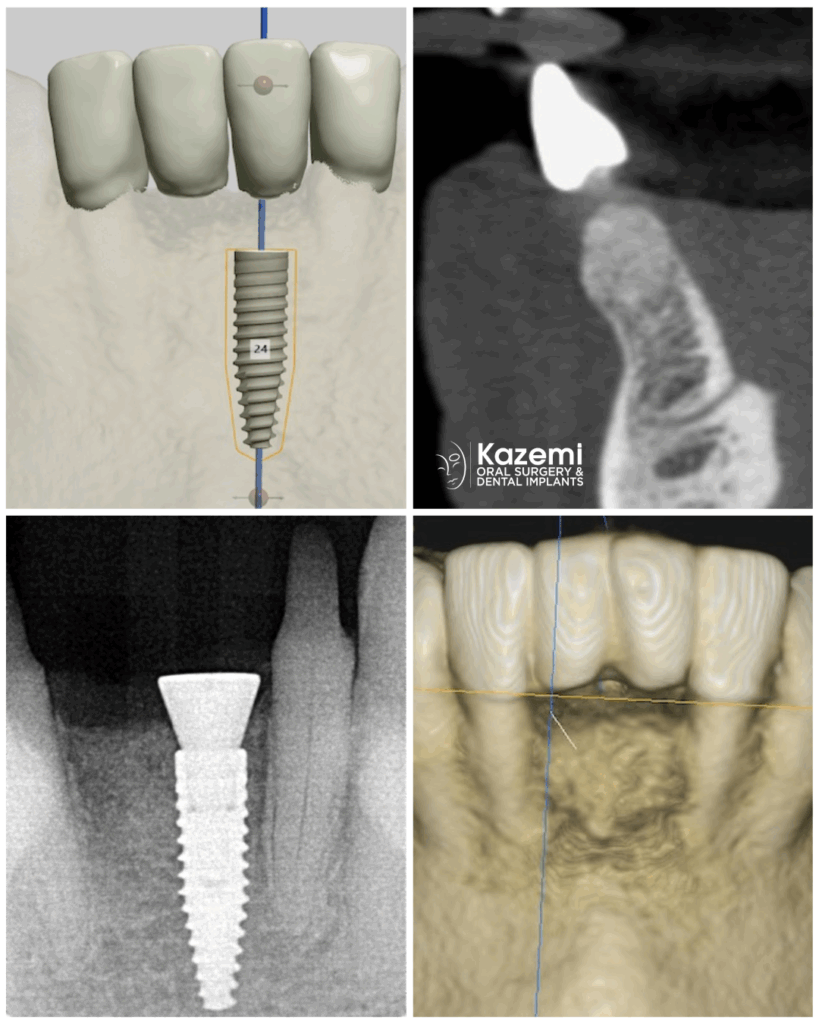
After several months of healing, the defect was completely regenerated in three dimensions. This allowed for placement of a dental implant in an ideal position, restoring both esthetics and function. With the rebuilt ridge, the implant was surrounded by healthy bone, ensuring stability and long-term predictability.
Why Guided Bone Regeneration?
While there are several techniques for ridge augmentation, GBR offers unique benefits:
-
Minimally invasive compared to block grafting
-
Single-surgery approach for combined horizontal and vertical defects
-
Predictable bone regeneration
-
Allows for ideal implant positioning
For patients, this means fewer surgeries, faster recovery, and more natural results. For clinicians, it reinforces the importance of comprehensive planning and advanced regenerative techniques in implant dentistry.
Key Takeaway
Guided Bone Regeneration can successfully restore even severe three-dimensional bone defects. By rebuilding both width and height in a single procedure, it paves the way for ideal implant placement and long-term success.
At Kazemi Oral Surgery & Dental Implants, we use advanced regenerative protocols to give our patients the best possible outcomes—restoring not only their smiles but also their confidence and quality of life.