Implant Options for Complete Missing Teeth
Start Here

Removable Overdentures

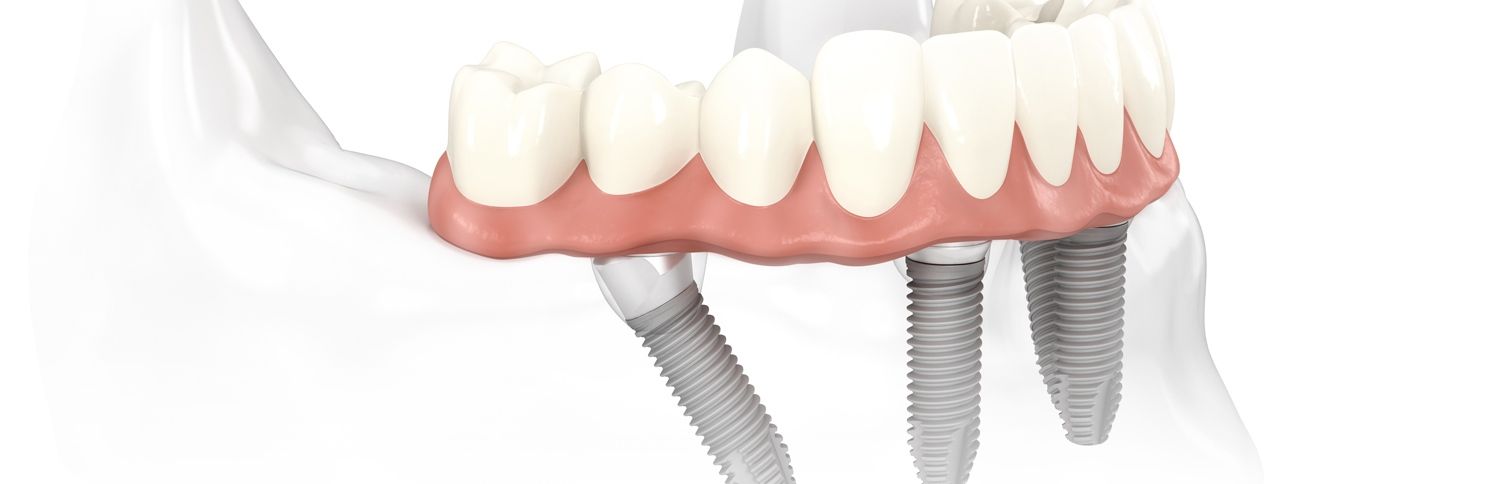
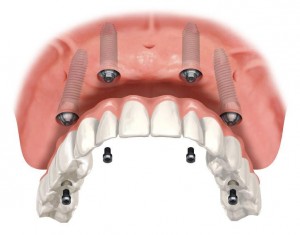
In this scenario, the prosthesis is supported by implants, but is easily removable by the patient. Two, three, or four implants are adequate for a removable overdenture. The more implants, the better the retention and stability of the denture. Overdentures with four implants are the most common option.

  • Two Implants: This is the simplest and minimum number of implants for support of an overdenture. You will have great denture retention and can eat quite comfortably.
  • Four Implants: This provides better support for your removable overdenture. Having four implants allows less denture extension, or flanges, and increases comfort dramatically. In some cases, a fixed prosthesis may be possible with four implants.

Advantages of a removable prosthesis:

  • Less costly
  • Relatively good stability
  • Patient can eat most foods comfortably
  • Repair or modification is relatively simpler and less expensive

Disadvantages of a removable prosthesis

  • The removable denture may not be well tolerated due to denture flanges.
  • Some patients may find the removable feature less satisfactory
  • May not be able to chew harder foods as comfortably as a fixed design
dentist bethesda md

Fixed-Hybrid Teeth

For patients who don’t want dentures that come out, there is the fixed option. This approach allows the prosthesis to be fixed to the implants and can only be removed by the dentist. They are designed to allow easy cleaning and maintenance.

  • All-on-4: With this options, a fixed prosthesis is supported by four implants. This can be used in patients with significant bone loss in the back of their jaws. Implants are positioned in a way that does not require bone grafting.

fixed hybrid-teeth supported by dental implants oral surgeon bethesda

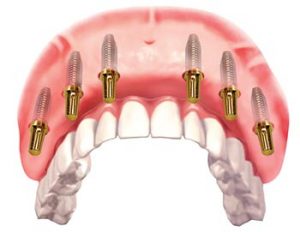
  • Five-Six Implants: This option can be used for fixed-hybrid or pink-free full-arch treatments. This is fixed restoration that has a metal sub-structure or made of full ceramic Zirconia  supported by the implants. This design eliminates denture extensions or flanges and feels more natural.all on 6 fixed hybrid implant supported teeth bethesda oral surgeon washington dc dentist
  • Eight Implants: This design is indicated for patients who want fully-fixed implant-supported bridge (providing there is sufficient bone and soft tissue) or for patients with large bone structures with increased arch size.  A fixed conventional bridge is typically made of porcelain or other ceramics and is supported by implants via screws or cement. A pink-free full-arch restoration is most commonly made of Zirconia supported by dental implants via screws.
  • More closely resembles the feeling of natural teeth.
  • Because it is completely supported by implants, no denture flanges are necessary therefore making it more comfortable
  • Extremely stable so any type of food can be chewed easily
  • Easily cleaned

Zygomatic Dental Implants for Patients with Severe Bone Loss:

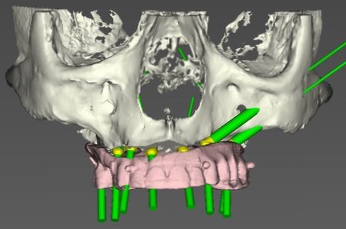
For patients who have lost significant amount of bone, inadequate for conventional implants, who do not want extensive bone grafting procedures, a fixed-full arch restoration supported by Zygmoatic or Pterygoid implants is an excellent option. This eliminates the need for extensive bone grafting procedures while providing the patient a fixed set of teeth. See an Example in our Portfolio

Fixed Implant-Supported Bridge

With  6 to 8 implants and presence of normal bone height and width, you may choose a conventional fixed bridge completely supported with the implants. Known as ‘pink-free’ implant-supported restoration, it provides the closest appearance and feel of natural teeth. The teeth are completely fixed and emerge out of gum tissue as natural teeth do.

This option is ideal for patients with completely missing teeth or about to loose their teeth due significant caries. A bridge design requires that a patient has no or minimal loss of bone and gum tissue as the bridge only replaced the crown aspect with no denture base. With this design, similar to a fixed hybrid prosthesis, the teeth are fixed and can not be removed by the patient.

This design by far as the most natural appearance and feel when compared to a fixed hybrid or an overdenture.

>> READ THIS IMPORTANT ARTICLE: The ‘No-Bone-Cut-Down’ Replacement of All Missing Teeth with Pink-Free Dental Implant Supported Restorations

A Patient Experience:


All-On-4 Treatment

The ‘All-on-4′ is a dental implant treatment option for those with completely missing teeth. The implants can be placed either in an immediate fashion on the same day as extractions (Teeth-in-a-Day)  or in delayed fashion once the extractions sites have healed (Delayed implant placement). The ‘All-on-4′ refers to placement of the entire prosthesis (i.e. teeth) on 4 dental implants. The prosthesis can be either removable or fixed.
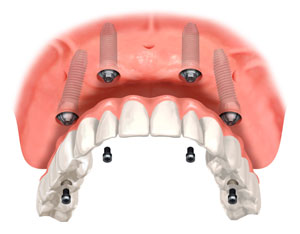
The ‘All-on-4′ treatment is a great solution for patients who have lost significant bone in the back of their  jaw and where bone grafting is not desired. The dental Implants are positioned in a way that does not require bone grafting while providing great support for the prosthesis. The ‘All-on-4′ technique can be done in both upper and lower jaws.
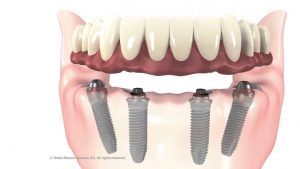
all on 4 dental implants bethesda washington dc dentist oral surgeon

Patients with teeth that require extraction:

A common scenario is a patient who needs all of their teeth extracted due to severe decay or gum disease. Here is how it works:

  • Teeth are extracted
  • Four immediate dental implants are placed on the same day. This is known as immediate implants.
  • An immediate full denture is then placed and supported by the four implants on the same day. This is known as immediate restoration.
  • The implants are allowed to heal for 2-3 months before fabrication of the final implant-supported prosthesis.
  • The implant-supported prosthesis is fixed to the implants with retaining screws and can not be removed by the patient.

Patients with all of their teeth missing:

If you have already had your teeth extracted, you can also have a removable or fixed prosthesis on 4 dental implants. This is how it works.

  • A CT scan is done to measure your existing jaw bone
  • A special guide is made from CT scan to help place the implants with precision
  • The implants are placed
  • Immediate full denture is placed and supported by the four implants on the same day
  • The implants are allowed to heal for 2-3 months before fabrication of the final implant-supported prosthesis.
  • The implant-supported prosthesis is fixed to the implants with retaining screws and can not be removed by the patient.

‘All-on-5′ or ‘All-on-6′:

Four implants are the minimum number of implants for this approach. However, it may be recommended to place 5 or 6 dental implants for additional support. More implants may be recommended for those with a large biting surface or strong chewing habits. The additional implants provide greater stability, strength, and support for the prosthesis. If you love eating harder food, the additional implants will be of great benefit to you.

How is ‘All-on-4′ treatment done?

  • The treatment is coordinated between Dr. Kazemi and your restorative dentist.
  • All diagnostic work-up including consultations, study models, X-rays, and CT scan (if necessary) are completed before your surgery.
  • On your day of surgery, Dr. Kazemi will perform all necessary extractions and will place the dental implants. We offer IV sedation, so you can be absolutely comfortable during the procedure.
  • Your restorative dentist, lab technicians and assistants will also be present in our office. They will fabricate your temporary implant-supported teeth which will be inserted on the same day.
 

Same-Day-Implants & Teeth (Immediate Implants and Teeth)

What is Same-Day-Implants & Teeth?

Same-Day-Implants & Teeth or Teeth-in-a-Day refer to the process where a patient can have necessary extractions done, dental implants placed and have an implant-supported prosthesis, all in the same day. It combines immediate implants and immediate restorations principles, so that a patient can come to the office in the morning, have all necessary surgery and prosthetic work completed, and leave home in the afternoon with fixed new teeth in place.

To achieve success, a number of factors must be considered:

  • Health of the extraction sites
  • Integrity of the surrounding bone
  • Location of implants
  • Type of prosthesis
  • Patient bite and forces of chewing

Immediate implant placement shortens the overall treatment time and consolidates your procedures into one. We offer Teeth-in-a-Day treatments but only to patients who meet strict criteria. Violation of such criteria significantly increases complications and failure rate.

A Patient Shares Her Experience:

Caution regarding Teeth-in-a-Day treatments:

Advertised widely by chain implant centers, the Teeth-in-a-Day concept has become largely a marketing fad. Teeth-in-A-Day, while promising and successful in selected group of patients, lacks sufficiency in its science, knowledge, literature, research, and expertise that is required to achieve predictable results.

The approach may be successful, but only in very few candidates with no infection around their teeth, have great amount of bone, and all conditions are ideal.  If conditions were this perfect, why would they need to have their teeth extracted to begin with? Many commercial “implant centers” do a hard sell to fit a patient into a treatment plan. Healthy natural teeth end up being extracted in order to place multiple implants and connect them with an immediate prosthesis on the same day! There are some evidence-based studies on this approach, but there are too many variables not yet thoroughly understood. Use of this approach in poor candidates results in high rates of failure and implant loss.

Many experts advise patients to be cautious of such hard advertisements and made promises that are often impossible to deliver.


IPS Preprosthetic Implants: A New Solution for Severe Jawbone Loss

A solution for patients with advanced bone loss who want dental implants WITHOUT BONE GRAFTING

no bone for dental implants IPS preprosthetic implant

For some patients, the greatest obstacle to dental implants is simply not having enough bone.

Severe bone loss may develop after years of missing teeth, long-term denture use, previous implant complications, trauma, infection, or other conditions affecting the jaws. In these situations, conventional dental implants may require extensive bone grafting and multiple surgical procedures, and in some patients conventional implant treatment may not be possible at all.

We now offer IPS Implants® Preprosthetic, a highly individualized implant solution developed by KLS Martin for patients with severe jawbone loss and complex anatomy.

What Is an IPS Preprosthetic Implant?

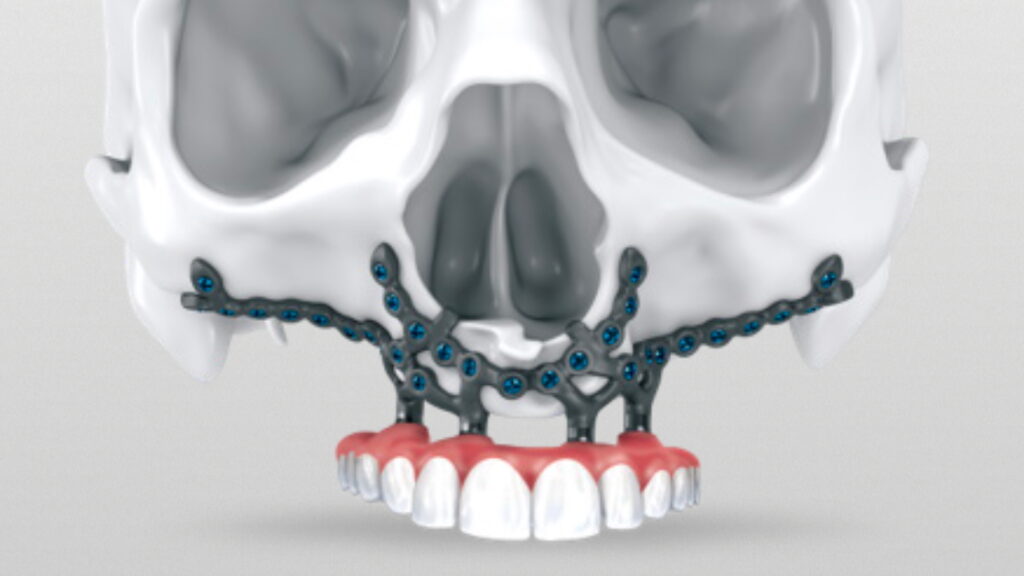
Unlike a conventional dental implant, which is selected from a range of standard implant sizes and placed within the available jawbone, an IPS Preprosthetic implant is individually designed for the patient’s unique anatomy.

The process begins with detailed 3D imaging. Using the patient’s CT/CBCT data and information about the planned teeth, the anatomy and proposed restoration are evaluated digitally. A patient-specific implant framework is then designed to achieve fixation in areas of available bone away from the severely resorbed portion of the jaw.

The result is a custom-designed implant created specifically for that patient rather than attempting to adapt a standard implant to severely compromised anatomy.

Who May Benefit?

IPS Preprosthetic implants are intended for complex situations and are not a replacement for conventional dental implants when adequate bone is available.

They may provide another option for selected patients with:

• Extreme upper or lower jawbone atrophy
• Significant bone loss after years of missing teeth or denture use
• Insufficient bone for conventional dental implants
• Previous unsuccessful implant or bone-grafting procedures
• Significant anatomical limitations
• Bone defects resulting from trauma or certain reconstructive procedures
• Situations in which extensive bone augmentation would otherwise be necessary

For some patients who have previously been told that they do not have enough bone for dental implants, this technology may provide an entirely different treatment pathway.

Potentially Avoiding Extensive Bone Grafting

One of the most important advantages of the IPS Preprosthetic approach is that extensive bone augmentation may not be necessary.

Traditional treatment of a severely atrophic jaw may require significant bone reconstruction before implants can even be placed. This can involve additional surgical procedures, healing periods, donor sites, and a considerably longer overall treatment process.

IPS Preprosthetic implants take a different approach. Instead of rebuilding the jaw to accommodate conventional implants, the implant is designed around the patient’s existing anatomy and available areas of bone.

For appropriately selected patients, this may significantly reduce the amount of reconstructive surgery and overall treatment time.

Designed Specifically for You

Every IPS Preprosthetic case begins with detailed digital planning.

Using advanced 3D imaging and virtual treatment planning, we evaluate the patient’s existing bone, facial anatomy, proposed tooth position, and restorative requirements. The implant framework and supporting posts can then be individually designed according to the patient’s anatomy and prosthetic needs.

This customized approach allows the surgical and restorative treatment to be planned together before surgery.

The Possibility of Immediate Teeth

Another important feature of the IPS Preprosthetic system is its ability to provide a stable foundation that can permit immediate postoperative loading in appropriately selected cases.

This means that rather than undergoing extensive grafting followed by months of healing before receiving teeth, certain patients may be able to receive a fixed provisional restoration much earlier in their treatment.

Whether immediate teeth are appropriate depends on the patient’s anatomy, implant stability, restorative plan, and other individual factors.

Conventional Implants, Bone Grafting, or IPS Preprosthetic?

There is no single treatment that is appropriate for every patient with bone loss.

When adequate bone is available, conventional dental implants remain an excellent and well-established treatment. When bone deficiencies are manageable, bone grafting can rebuild the necessary foundation and provide highly predictable results.

IPS Preprosthetic implants give us an additional option for the more challenging end of the spectrum: patients with severe or extreme bone loss, complex anatomy, or circumstances in which conventional implant reconstruction would require extensive additional surgery.

The key is determining which approach provides the most appropriate balance of predictability, surgical complexity, treatment time, function, and long-term maintainability for each individual patient.

A New Option When You’ve Been Told You Don’t Have Enough Bone

Being told that you have severe bone loss does not necessarily mean that dental implant treatment is no longer possible.

Advances in 3D imaging, virtual surgical planning, and patient-specific implant manufacturing have created new possibilities for some of the most challenging implant situations.

At Kazemi Oral Surgery & Dental Implants, we can evaluate your anatomy and discuss the full range of options, including conventional dental implants, advanced bone reconstruction, and patient-specific IPS Preprosthetic implants, to determine which approach is most appropriate for you.


Treatment Options & Cost

So you have complete missing teeth or about to loose the remaining teeth and don’t know how to proceed. You have questions on the best treatment approach and which type of teeth best meets your needs. And of course want to know how much it costs and which option is most affordable. Your next step is to schedule a virtual consultation.

To help us better understand your needs and determine the best solution for you, we’d appreciate it if you could answer a few brief questions below. Your responses will help us tailor your consultation and ensure we provide the most appropriate treatment options.

Dental Implant Treatments Questionnaire- Online Consultation
Name
Name
First Name
Last Name
Please select from the following:
The most important factor in my decision to start treatment is:
Do you need financing options for your treatment?
My credit history is:
Will someone co-sign your application for financing approval?
Have you had consultations with other providers?
My dental implant treatment needs are:

Full Arch Dental Implant Treatment Inquiries

I need complete replacement of:
What is the state of your current teeth:
Are you currently wearing a full or partial denture?
How comfortable are you with your existing denture or partial denture?
I am looking for:

Single or Several Dental Implants Treatments Inquiries

What is your treatment needs?
How long have your teeth been missing?
Select the Position of Teeth to Be Replaced with Implants: