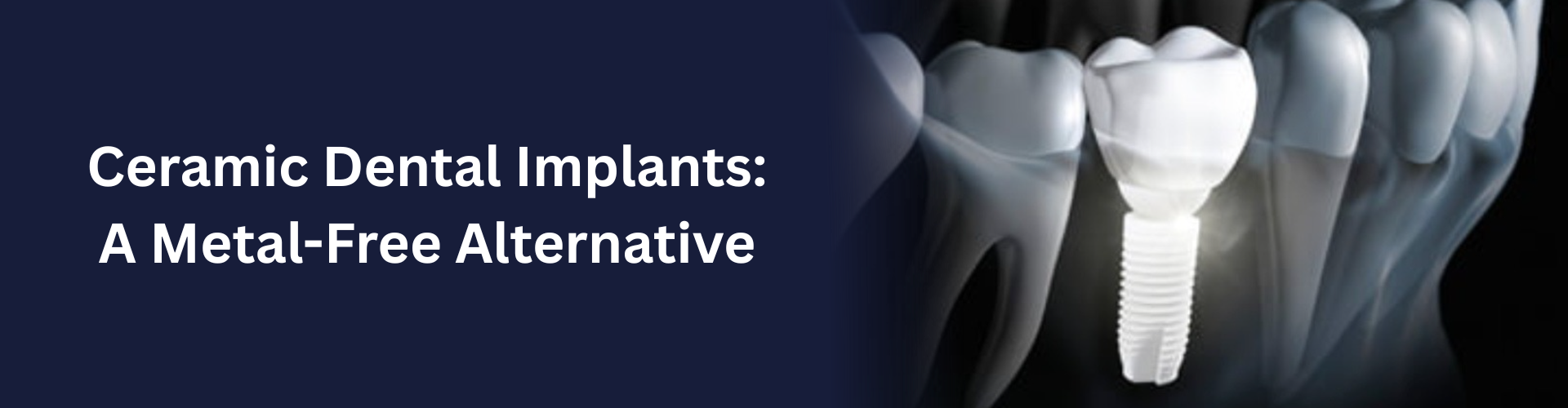
Ceramic Dental Implants: A Metal-Free Alternative
Dental implants have traditionally been made from titanium, a material with an extensive history of successful use in dentistry and medicine. Titanium remains an excellent choice for most patients and continues to be the most widely used material for dental implants.
However, some patients are interested in a completely metal-free alternative. We now offer Z-SYSTEMS ceramic dental implants, made from high-performance zirconium dioxide, or zirconia, ceramic.
Why Consider a Ceramic Implant?
Ceramic implants may be considered for several reasons.
Some patients simply prefer to minimize or eliminate metals from materials placed in their bodies. Others may have a history of sensitivity to certain metals or may have experienced unexplained symptoms or poor outcomes associated with previous dental implants.
True allergy or hypersensitivity to titanium appears to be rare. However, research has demonstrated that microscopic titanium particles can be released from dental implants through several mechanisms, including implant insertion, corrosion, and mechanical wear. In susceptible individuals, these particles may potentially contribute to inflammatory or hypersensitivity-type responses.
Additionally, dental implant systems may include components or alloys containing metals other than titanium. Therefore, when a patient has a history of metal sensitivity or an unusual reaction associated with a previous implant, the cause may not always be clear.
Importantly, an unexplained symptom following titanium implant placement does not necessarily mean that a patient is allergic to titanium. Implant problems can have many causes, and currently available tests for titanium hypersensitivity have limitations. A careful clinical evaluation is essential before attributing symptoms or implant failure to a material reaction.
What Are Z-SYSTEMS Ceramic Implants?
Z-SYSTEMS implants are made from zirconium dioxide, a high-performance ceramic material. Unlike conventional titanium implants, the implant itself is metal-free and has a naturally white color.
Zirconia is biocompatible and has been used extensively in dentistry for crowns, bridges, and other restorations. Its white color can also offer an aesthetic advantage, particularly in patients with thin gum tissue or in highly visible areas where the gray color of a titanium implant could potentially become noticeable.
Who Might Consider a Ceramic Implant?
A ceramic implant may be worth considering for patients who:
• Prefer a metal-free dental implant
• Have known sensitivities or concerns regarding metals
• Have experienced unexplained symptoms associated with previous titanium implants
• Have experienced an implant complication in which more common causes have been carefully evaluated and excluded
• Have thin gum tissue or particular aesthetic concerns
• Simply prefer zirconia over titanium after discussing the advantages and limitations of both materials
Titanium or Ceramic: Choosing the Right Implant
We do not believe there is one implant material that is right for every patient.
Titanium dental implants have decades of research and an outstanding clinical track record. Ceramic implants provide an additional option for appropriately selected patients, particularly those seeking a metal-free solution.
Our approach is to evaluate the entire patient rather than simply select an implant material. We consider your medical and dental history, bone and soft tissue anatomy, previous implant experiences, aesthetic requirements, implant location, functional demands, and personal preferences.
For patients who have experienced unusual or unexplained problems with a previous implant, we also look carefully for more common causes of implant complications before considering a possible material-related reaction.
The goal is not simply to place an implant. It is to select the material, design, and treatment approach most likely to provide a healthy, stable, aesthetic, and comfortable long-term result.